

Have you been jumping from one task to another? Did you miss your deadline again? Are you overwhelmed with the demands of online classes, a busy professional life, and personal commitments? Fret not! You are not alone in dealing with such time constraints.
For high school students, effective time management is essential. As a premium educational assistance service provider in the US, we have frequently received complaints from students who struggle to manage their time and, therefore, require external support.
Thus, our experts have come up with time management tips for high school students so that you can manage your classes, professional commitments, and personal life while enjoying it. Without further ado, let’s examine the practical strategies.
Guide to Time Management Tips for High School Students
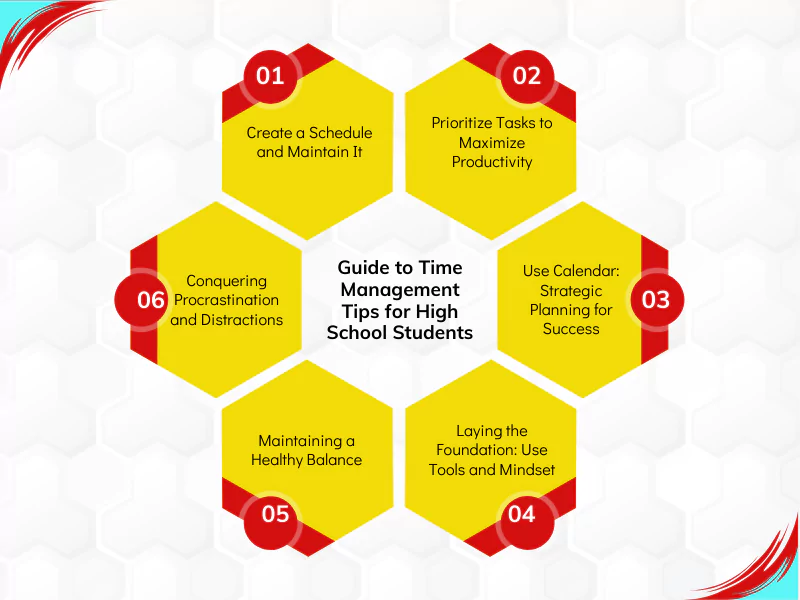
Create a Schedule and Maintain It
The first and foremost essential task is to stay organized. A daily schedule is crucial for high school students to remain productive. Research has shown that maintaining a daily routine can help reduce stress and increase productivity.
Therefore, to master time management, you must create a schedule that includes specific times for studying, completing assignments, and participating in extracurricular activities. It’s essential to ensure that they also include time for self-care and social interaction.
For instance,
➞ 6:00 AM – 7:00 AM
- Wake up & Morning Routine: Freshen up, exercise, breakfast, and prepare for the day.
➞ 7:00 AM – 8:00 AM
- Review Notes / Light Study: Review notes from the previous day or prepare for upcoming tests.
➞ 8:00 AM – 3:00 PM
- School Time: Attend classes, take notes, and participate in discussions.
➞ 3:00 PM – 4:00 PM
- Extracurricular Activity: Participate in sports, clubs, or creative hobbies (e.g., basketball practice, music, debate).
➞ 4:00 PM – 5:00 PM
- Break & Snack: Relax, enjoy a snack, and recharge for the evening.
➞ 5:00 PM – 6:30 PM
- Homework / Study Session 1: Focus on the most challenging subjects first (e.g., math, science).
➞ 6:30 PM – 7:00 PM
- Dinner & Family Time: Enjoy dinner, spend quality time with family, or unwind.
➞ 7:00 PM – 8:00 PM
- Homework / Study Session 2: Finish remaining assignments, review notes for upcoming tests or quizzes.
➞ 8:00 PM – 9:00 PM
- Self-Care / Relaxation: Engage in a self-care activity, such as reading, meditation, or taking a walk.
➞ 9:00 PM – 9:30 PM
- Social Interaction / Leisure: Spend time with friends or unwind by watching TV, playing games, or engaging in online chats.
➞ 9:30 PM – 10:00 PM
- Night Routine & Bedtime Prep: Wind down and get ready for bed.
➞ 10:00 PM
- Sleep: Ensure 8 hours of sleep for optimal performance the next day.
Prioritize Tasks to Maximize Productivity
The next important task is to prioritize your tasks to maximize productivity. It is essential to look at what needs to be done first and what’s most crucial. Many students create a to-do list. A to-do list of your schoolwork is a great way to do this. Be sure to put the most important daily or weekly tasks at the top. This will help you make adjustments for sudden tasks that you cannot ignore or seek Time Horizon Assignment Help before it’s too late. Furthermore, you will not miss any assignment due dates and stay on track.
Example:
Imagine you have an upcoming math test, a history essay due in three days, and a family birthday party to attend in a week.
- Top priority: Study for the math test (due in 2 days).
- Secondary priority: Complete the history essay (due in 3 days).
- Least priority: Prepare for the family birthday party (due in a week).
By creating a to-do list and ensuring the math test preparation takes priority, you maximize productivity by focusing on urgent tasks first.
Use Calendar: Strategic Planning for Success
To manage your time properly, always start by making a calendar. A central location, such as an email calendar, daily diary, or whiteboard in your study area, can help you stay on top of your tasks and prioritize your time effectively and eventually shine academically.
- Purpose: Visualize all upcoming deadlines, exams, social events, and other time commitments.
- Tools: Physical planners, digital calendars (Google Calendar, Outlook Calendar, Fantastical, Calendly).
- Visibility: Keep it in a place where it’s seen daily (planner, wall, digital alert).
Example:
You create a digital calendar for a weekly schedule (e.g., Google Calendar).
- January 1st: Set a reminder for a study session for the final exam in biology.
- January 5th: Block time for a school project due next week.
You add personal reminders (e.g., “Soccer practice at 4:00 PM on January 7th”) to ensure that your social commitments don’t interfere with study time or when you yourself complete the Assignment On Time Management. Now you have enough hours in the day to do things you enjoy!
Laying the Foundation: Use Tools and Mindset
Smart time management techniques involve using your time wisely and coordinating your tasks to ensure you complete them and achieve your goals. One of the most important time management tips for students is to set aside dedicated time for studying or homework. It is also important to find your productive time. Figure out whether you are a morning person or a night person and schedule your tasks accordingly.
Example:
You realize that you’re most productive in the evening, so you schedule your study sessions for 7:00 PM to 9:00 PM.
- Tool: A physical planner where you note down specific study goals (e.g., “Finish chemistry notes for Chapter 3”).
- Mindset: You adopt the “Pomodoro Technique,” which involves studying for 25 minutes, followed by a 5-minute break. This helps you keep motivated and stay on track while avoiding burnout.
If you are hitting a burnout and need a quick fix, then you can get assignment help.
Maintaining a Healthy Balance
It is essential to remember that your most valuable asset is your health. You need to accomplish a study-life balance to ensure better health. Make time for yourself. Don’t forget about “me” time and be sure to schedule time to relax. Block two hours in the day to meditate or do what you like. Encourage social interaction. This involves helping you build strong relationships and develop social skills that will serve you well in all aspects of life. Get a good night’s sleep. High school students require an average of 8-10 hours of sleep per night.
Example:
You ensure that after each study session, you take time for yourself to recharge:
- Me time: You schedule two hours on Saturday afternoons to relax and read a book, free from any academic work.
- Social interaction: You join a weekend study group for group projects, helping you maintain strong relationships with classmates while being productive.
- Sleep: Aim for 9 hours of sleep on weekdays, avoiding late-night cramming sessions to ensure a fresh mind the next day.
Conquering Procrastination and Distractions
Distractions can be a major hindrance to high school students’ productivity. With the widespread use of technology and social media, it has become increasingly challenging to stay focused. It’s important to establish clear guidelines around technology and social media use during study time. Eliminating distractions and taking regular breaks are also beneficial. These habits are ways to manage time in order to help you achieve academic success.
Example:
- Distractions: You know that checking social media during study sessions causes distractions, so you set your phone to “Do Not Disturb” and place it in another room while you work.
- Procrastination: To overcome procrastination, you set small tasks (e.g., “Complete one paragraph of the essay”) to give you a sense of accomplishment. This helps you overcome the overwhelming feeling of a large project.
By incorporating these habits, you’ll stay on track and minimize distractions, leading to better productivity.
How Do Time Management Skills Help in Real Life?

- Reduced Stress: Effectively managing time can significantly alleviate the pressure and anxiety associated with academic and personal commitments.
- Improved Academic Performance: Planning and prioritizing lead to better study habits, higher-quality work, and ultimately, better grades.
- Enhanced Mental Health and Well-being: Creating space for relaxation, social activities, and personal interests prevents burnout and promotes a balanced lifestyle.
- Increased Productivity: Accomplishing more in less time, freeing up valuable time for other pursuits.
- Skill for Life: Time management is a transferable skill valuable in higher education, careers, and personal life.
Conclusion: Building a Lifelong Skill
If you think you don’t have enough time to study and need to cram everything the night before the exam, then try out the time management tips for high school students provided here. We believe you will not only be able to manage your time well but also maximize your time and productivity. Also, don’t forget the weekly review session of your plans and scorecard to understand the progress you have made. One last thing, always celebrate little wins so you feel motivated for the bigger wins in life.
Frequently Asked Questions
Why Is It Important for Students to Prioritize and Say "No"?
Prioritizing tasks is essential when faced with limited time and numerous commitments. Most students face time management challenges because they fail to evaluate urgent deadlines and consider their energy levels to decide what to tackle first.
Therefore, it is essential to learn to say “no” to non-essential commitments or social engagements if they interfere with more critical tasks, such as studying for an exam, which is a significant reason for poor time management for high school students.
This helps alleviate pressure and ensures that important academic responsibilities are met, even if it means rescheduling leisure activities.
How Can Students Practically Implement Time Management Strategies?
- Create a weekly calendar to track deadlines and commitments.
- Set periodic reminders for priority tasks and remove those that negatively affect you.
- Build a personalized schedule that aligns with their energy levels and daily rhythms.
- Utilizing tools like physical planners, digital calendars (e.g., Google Calendar, Outlook Calendar), scheduling apps (e.g., Asana, Trello), and note-taking tools (e.g., Notion, Evernote) can further enhance organization, focus, and productivity.
- Categorize tasks based on urgency and importance (e.g., using the Eisenhower Matrix).
- Breaking large tasks into smaller, manageable chunks
- Dedicate specific study times free from distractions is also crucial.
What Are the Core Benefits of Effective Time Management for Students?
- Improved academic performance;
- Reduced stress;
- A more balanced life.
By planning, organizing, and controlling how time is spent, you can achieve more in less time, allowing for better retention of material, enhanced mental health, and personal development. It also prepares you for future challenges in higher education and careers by building crucial life skills.
How Does Self-Care and Flexibility Factor into Effective Time Management?
Students should intentionally schedule time for fun, relaxation, and personal activities, such as hobbies, socializing, or simply taking a break and sleeping in. This helps prevent burnout, maintains mental health, and provides things to look forward to during stressful periods.
Additionally, being realistic and flexible is key; unforeseen circumstances can arise, and it’s important to adapt schedules and be patient with oneself when things don’t go exactly as planned. Building in buffer time can help manage unexpected delays.
What Are Common "Time-Wasters" That Students Should Recognize and Avoid?
- Excessive social media use,
- Procrastination,
- Multitasking.
The first step to manage your time more effectively is to recognize these habits. To minimize distractions and achieve your set goals, you should set specific times for checking social media, create a focused study environment, and utilize tools or apps (such as Forest or Focus@Will) designed to help maintain concentration that align with your goals.
When facing procrastination due to uncertainty, you should seek clarification from teachers to move forward on assignments or take advantage of the academic resource centre.
How Can Students Balance Academic Work with Extracurricular Activities and Personal Life?
Creating a structured schedule that allocates time for study, activities, relaxation, and socializing with friends and classmates is vital. Communication is also key; you should discuss your schedules with teachers and coaches, seeking support or negotiating deadlines as necessary to manage their time effectively.

Want To See My Profile — Check Now
- Best 200+ SAE Project Ideas for School Students - October 25, 2025
- How to Choose a Research Topic? Tips with Discipline-Specific Topic Ideas - September 17, 2025
- Time Management Tips for High School Students: A Complete Guide - September 9, 2025